
Christopher Nolan’s The Odyssey is the first film ever shot entirely on IMAX cameras. There are only 25 theatres in the United States capable of showing it the way it was meant to be seen. Fans are driving hundreds of miles, delaying pregnancies, and booking 2am screenings to get there. Here is why.
When Christopher Nolan makes a film, he tends to have opinions about how it should be watched. With The Dark Knight he pushed for IMAX sequences in a superhero film that most studios would have shot entirely on conventional cameras. With Dunkirk he used IMAX cameras to put audiences inside a small boat on the English Channel in a way that felt genuinely physical. With Oppenheimer he shot the Trinity test sequence in IMAX and used the format to make a conversation between two men in a room feel somehow as large as the subject they were discussing.
With The Odyssey, which opened in theatres on July 17, 2026, he went further than any of that. He shot the entire film, every single frame of it, on IMAX film cameras. No director has ever done this before on a commercial theatrical release. The Odyssey is the first film in the history of cinema to have been shot entirely in this format, and the difference between watching it on an IMAX 70mm film screen and watching it anywhere else is, according to everyone who has seen both, not subtle.
There are 25 theatres in the United States capable of showing The Odyssey in true IMAX 70mm film. In a country of 335 million people and thousands of cinema screens, that number is small enough that people are booking tickets months in advance, driving across state lines, scheduling road trips of hundreds of miles, and, in at least one documented case, timing a pregnancy around the film’s release date to ensure they can make the journey.
This is the story of a format, a film, and why the two of them together have produced one of the more remarkable audience responses in recent cinema history.
What IMAX 70mm actually is
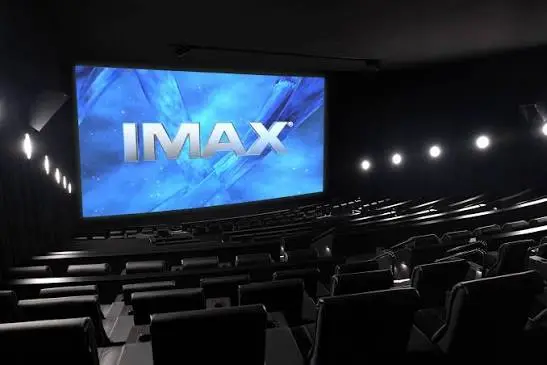
To understand why people are going to these lengths, it helps to understand what IMAX 70mm film actually is and how it differs from the digital projection that most cinema audiences have been watching for the past fifteen years.
Standard cinema film runs vertically through a projector at 35mm width, with four perforations per frame. IMAX 70mm film runs horizontally through a projector at 70mm width, with fifteen perforations per frame. The frame area is approximately ten times larger than a standard 35mm film frame, which means the amount of visual information captured is ten times greater. When that image is projected onto an IMAX screen, which runs floor to ceiling and wall to wall in a purpose-built auditorium, the result is an image of a size and resolution that no digital projection system currently in existence can match.
The aspect ratio is also different. In IMAX 70mm locations, The Odyssey will be presented in IMAX’s 1.43:1 expanded aspect ratio, with each film frame having 15 perforations running horizontally through the projector. It is the largest and highest-resolution format available. In a standard cinema, films are typically presented in a 2.39:1 widescreen ratio, which fills the horizontal width of the screen but leaves significant portions of the top and bottom unused. IMAX 70mm fills the entire screen, top to bottom and side to side, which means the audience sees roughly forty percent more of the image than they would in any other format.
Nolan has spoken about this difference consistently across his career, but the scale of the commitment he has made with The Odyssey is new even by his standards. The Odyssey was shot entirely with IMAX film cameras, the first commercial feature film to do so. Earlier Nolan films used IMAX cameras for selected sequences while shooting the rest of the film on conventional cameras. With The Odyssey, there is no conventional footage. The entire film exists at IMAX resolution. In IMAX 70mm, audiences are seeing everything the cameras recorded. Everywhere else, they are seeing a version of the film cropped and reduced to fit a smaller format.
The problem nobody expected
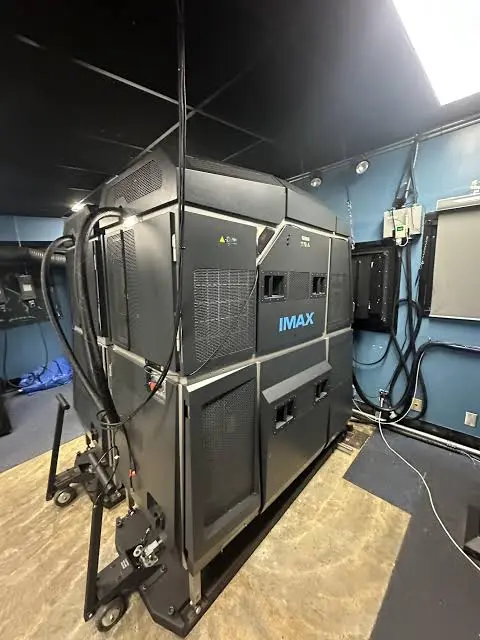
Only 25 theaters in the United States are equipped to project The Odyssey in true IMAX 70mm film, prompting moviegoers to embark on cross-country road trips and even delaying pregnancies to experience the cinematic milestone.
The question this raises is obvious: if IMAX 70mm is so superior, why are there only 25 theatres in America capable of showing it?
The answer involves a technology ecosystem that was effectively dismantled and then discovered to be harder to rebuild than anyone had anticipated. When Hollywood transitioned from film to digital projection in the late 2000s and early 2010s, studios and theatre chains moved quickly and comprehensively. Digital projectors were cheaper, easier to maintain, did not require physical film prints to be manufactured and shipped, and were accurate enough for most commercial purposes. The transition made economic sense at the time, and it happened fast.
What it also did was effectively end the manufacturing supply chain for the specialised equipment that IMAX 70mm projection requires. Sources at IMAX confirmed that many of the parts needed to build these specialised film projectors simply no longer exist. The original design files were created roughly half a century ago but were never properly maintained. As a result, IMAX no longer has a complete manufacturing blueprint, and much like the lost tribal knowledge of the Apollo-era spacecraft, very few engineers working today fully understand the systems.
The projectors that exist in those 25 theatres are, in most cases, decades old. They have been maintained and serviced by a shrinking pool of engineers who learned the systems during the film era and have kept them running through a combination of expertise and improvisation. Building new ones from scratch is not straightforwardly possible in the way it would have been thirty years ago. The knowledge required, and the manufacturing infrastructure required, were both casualties of the industry’s transition to digital.
Currently only 30 movie theaters worldwide are equipped to offer the IMAX 70mm film format. Cinemark, one of the major American theatre chains, announced an agreement to build three new 70mm film projection systems specifically to be operational before The Odyssey arrived. Those new locations are in Woodridge, Illinois, Colorado Springs, Colorado, and Rochester, New York. They represent a significant investment in a technology that the industry had largely written off, driven specifically by demand for this one film.
What fans are actually doing
Simon James, a 33-year-old attorney in New York City, bought 18 tickets to IMAX 70mm screenings of The Odyssey at AMC Lincoln Square over the film’s first three weeks of release. He is not the outlier he might appear to be.
Amber Connaghan, a 29-year-old tech editor living in the California desert, bought her ticket over a year ago and has been planning a three-hour drive to the closest theatre showing the film in IMAX 70mm. One of her friends suggested she have a second child. “I was like, ‘No, I have to wait a few months. Otherwise, it’s going to be too close to The Odyssey.'”
AMC Lincoln Square in New York, which has one of the most celebrated IMAX 70mm screens in the country, has been running The Odyssey six times a day in the format, including screenings at 2am, 3am, and 6am to meet demand that cannot be accommodated during conventional hours. At a 2am screening in the opening week, 650 people filled the auditorium for a three-hour film on a weeknight. The first words out of their mouths when asked why they had come at that hour were not the director’s name or the cast. They were “IMAX 70mm.”
This level of audience investment in a specific technical presentation format is unusual by any standard. Films attract audiences based on story, stars, director, marketing. The technical specification of the projection equipment is not normally a factor that drives people to book tickets a year in advance or drive three hours on a weeknight. The Odyssey has changed that calculation, at least for a significant subset of cinema audiences, in a way that says something interesting about what people want from the cinema experience in 2026.
What the film actually is
The Odyssey adapts Homer’s foundational epic, following Odysseus on his decade-long journey home from the Trojan War. The film stars Matt Damon as Odysseus, alongside Tom Holland, Anne Hathaway, Robert Pattinson, Lupita Nyong’o, Samantha Morton, Zendaya, and Charlize Theron. It runs approximately three hours, which given the scope of the source material represents a significant compression of a story that spans ten years and includes encounters with cyclops, sirens, witches, gods, and the underworld itself.
Nolan’s track record with large-scale, formally ambitious material is strong enough that anticipation for the film has been building since the project was announced. The decision to shoot the entire film on IMAX cameras has given that anticipation a specific technical dimension that is somewhat new in the culture of cinema fandom. The conversation around The Odyssey has been as much about the format as the story, which is either a sign of how completely Nolan has convinced audiences to care about the means of production, or a sign that cinema audiences in 2026 are more sophisticated about these distinctions than they are usually given credit for.
Why this matters beyond one film
The IMAX 70mm response to The Odyssey is interesting beyond the film itself because it represents something that was not supposed to happen. The film industry’s transition to digital was sold partly on the argument that audiences would not notice the difference, or would not care. The extraordinary lengths people are going to in order to see The Odyssey in IMAX 70mm suggests that at least some audiences do notice, do care, and are prepared to make significant efforts to access a better version of the experience.
Whether this translates into broader investment in film projection infrastructure, or whether it remains a niche phenomenon driven specifically by Nolan’s unusual ability to generate this kind of audience commitment, is an open question. What is not open is that The Odyssey has become the most high-profile argument for physical film projection that the cinema industry has seen in years, at a moment when the industry is still working out what premium cinema experiences look like in a streaming-saturated landscape.
The IMAX 70mm screens are sold out weeks ahead. The 2am screenings are full. People are driving hundreds of miles and adjusting major life decisions to be in one of 25 rooms. Nolan has made this argument before, with every film he has released in this format. With The Odyssey he has made it louder, and more people appear to be listening, than at any point in his career so far.
===============================================================
END OF ARTICLE
© SourPost. All rights reserved.
===============================================================