
William Moldt disappeared into the Florida night in 1997 and was never found. Twenty-two years later, a bored man scrolling through Google Earth on a quiet afternoon changed everything.
On the night of November 7, 1997, a 40-year-old mortgage broker named William Earl Moldt set down his drink at a nightclub in Wellington, Florida, and walked out into the night. He was alone. He did not appear intoxicated. At around 9:30 in the evening he had called his girlfriend from the bar and told her he would be home soon.
He never arrived.
In the days that followed, the Palm Beach County Sheriff’s Office searched the roads, checked hospitals, contacted acquaintances, and found nothing. The case was opened as a missing persons investigation and remained open. Weeks passed. Then months. Then years. The neighbourhood around the Grand Isles development in Wellington continued to grow. Houses were built and sold. Families moved in and out. Children who were small in 1997 grew up. William Moldt’s name was added to the National Missing and Unidentified Persons System and stayed there, one entry among thousands, as the years accumulated around it.
Twenty-two years later, the answer was sitting in a pond behind a row of houses. It had been there the entire time.
A quiet afternoon on Google Earth
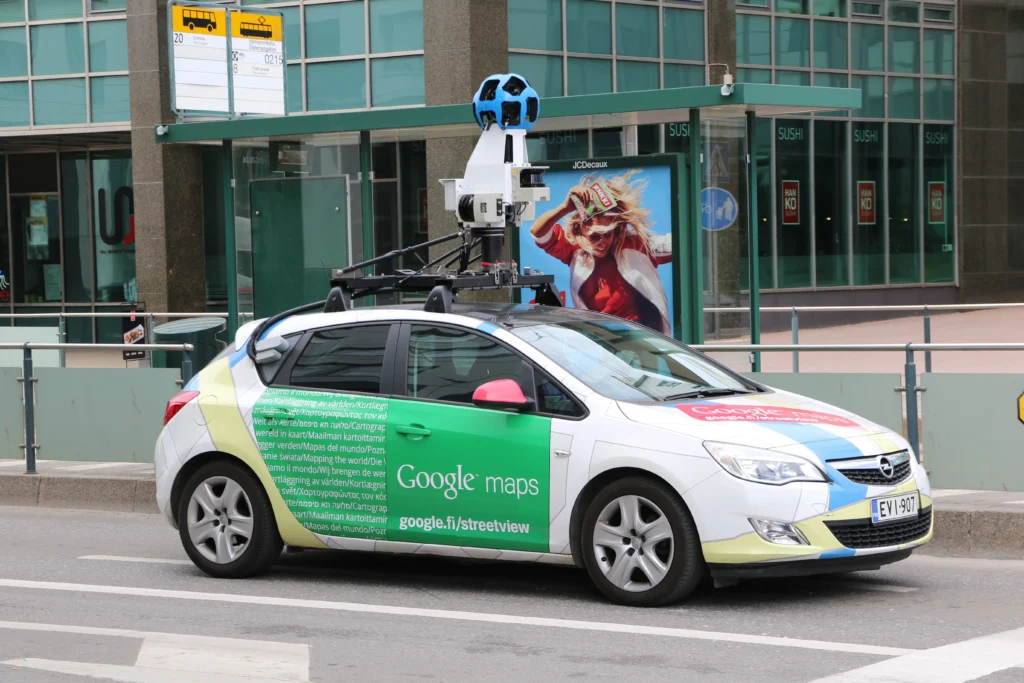
In the summer of 2019, a man who had previously lived in the Grand Isles neighbourhood was doing what millions of people do when they are feeling nostalgic and have a few minutes to spare. He opened Google Earth and began scrolling through his old neighbourhood, looking at the streets he used to know.
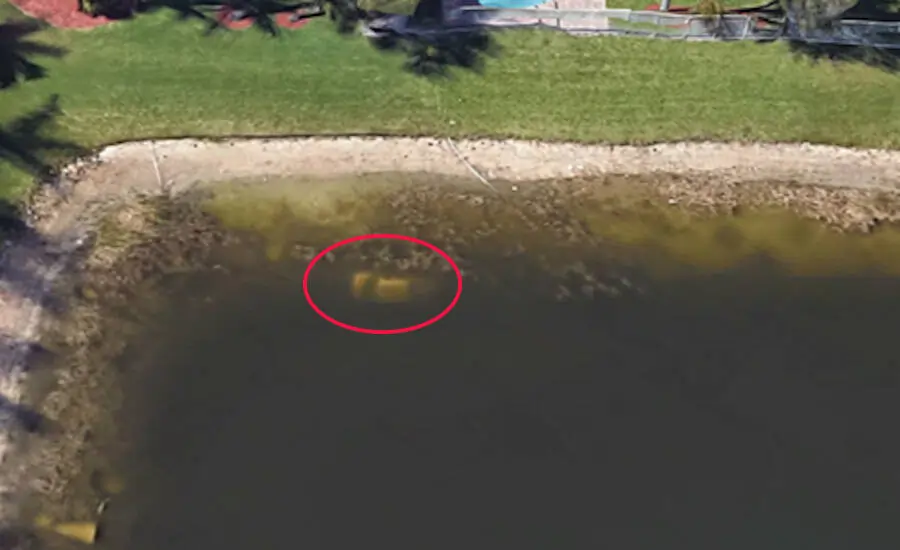
As he moved across the familiar landscape, something caught his eye at the edge of a retention pond. A shape in the water. Faint, partially obscured, but there. It looked like it might be a car.
He took screenshots and sent them to his ex-wife, who still lived in the area. She recognised the pond immediately. It was the one behind the house of her neighbour, a man named Barry Fay, who had lived there for nine years. She forwarded the images to Fay and asked whether he could see what she was seeing.
The next day, Fay launched a drone over the pond. As the camera moved across the water, the shape resolved slowly from blur into something unmistakable. A white sedan, sitting on the edge of the pond floor, draped in the green and grey of years of accumulated growth. Fay initially assumed it was an old abandoned vehicle that had been dumped there at some point. He called the Palm Beach County Sheriff’s Office on August 28, 2019.
When deputies arrived and the car was lifted from the water by crane, the exterior was, in the Sheriff’s Office’s own words, heavily calcified and obviously in the water for a significant amount of time. When the doors were opened, skeletal remains were found inside.
Two weeks later, on September 10, 2019, the Medical Examiner’s Office confirmed the identity. The remains belonged to William Earl Moldt. He had been missing since 1997, at the age of 40. He had been in that pond for twenty-two years.
Barry Fay, whose home sat a short distance from where the car was found, told the Palm Beach Post that in nine years of living there, he had never noticed anything unusual from the shoreline. “Never did I believe there would be a 22-year-old dead body,” he said.
The detail that is almost impossible to sit with
The discovery of William Moldt’s remains was already an extraordinary story. But the detail that emerged afterward made it something else entirely.
According to the Charley Project, which maintains an online database of missing persons cases, the car had been plainly visible in Google Earth satellite imagery of the area since 2007. That is twelve years before anyone noticed it. Twelve years during which the image was accessible to anyone with an internet connection and a reason to look at that particular stretch of water in Wellington, Florida.
The pond was there when William Moldt disappeared in 1997. The neighbourhood around it was still under construction at the time, which may explain why no one was close enough to notice a car going into the water that night. But by 2007, when satellite imagery first captured the white shape sitting in the shallows, the houses were built and occupied, and the image was there for anyone to find.
Millions of people use Google Earth. Some of them, over those twelve years, almost certainly scrolled across that pond. Zoomed in. Zoomed out. Moved on without seeing what was there to be seen.
What we know and what we do not
The circumstances that led William Moldt and his car into that pond remain unknown. There was no investigation that concluded with a finding of foul play, and no evidence that his death was anything other than an accident. The most plausible explanation, given that the subdivision was under construction when he disappeared and that the area around the pond would have been poorly lit and perhaps unmarked, is that he simply drove into the water in the dark and could not get out.
But that explanation, however plausible, is not confirmed. What happened between the moment he left the nightclub and the moment his car entered the water remains, in the strictest sense, unknown. The case was closed when his identity was confirmed, but the full story of that night in 1997 died with him.
What is confirmed, and what makes this story linger in the mind long after you have finished reading it, is the geometry of it. A man disappears. A search finds nothing. A case goes cold. Years pass. A satellite photograph, taken as part of a routine imaging programme with no awareness of what it was recording, captures a white shape in a pond. The image sits in a publicly accessible database for twelve years. And then one afternoon a bored man, scrolling through his old neighbourhood for no particular reason, looks at the right patch of water at the right moment and sees something that nobody had seen before.
Google Earth and the cases it has helped solve
William Moldt’s case is not the only one in which Google Earth or Google Maps has played an unexpected role in a missing persons investigation or a cold case. The satellite imagery programmes, which were designed to map the surface of the earth for navigation and geographic purposes, have become an inadvertent archive of the world as it existed at various moments in time.
In some cases, the imagery has helped investigators locate clandestine burial sites. In others, it has provided evidence of structures or land use changes relevant to criminal investigations. Amateur investigators in the true crime community have increasingly turned to historical satellite imagery as a research tool, combing through images of locations relevant to unsolved cases in search of details that might have been missed.
The William Moldt case stands apart from most of these, not because of the investigative methodology but because of the sheer accidental nature of the discovery. Nobody was investigating William Moldt’s disappearance on that afternoon in 2019. Nobody had a reason to look at that pond. A former resident was experiencing a moment of ordinary nostalgia, and by chance, he happened to look at the right place.
The question the story leaves behind
There is a version of this story that is primarily about technology. About how satellite imagery and consumer mapping tools have changed what is possible in terms of finding things that have been lost or hidden. That version is real and worth thinking about.
But the version that stays with you is simpler than that. A man called his girlfriend and said he would be home soon. Then he drove into a pond in the dark, and nobody knew. For twenty-two years, the people who remembered him carried the particular unresolved grief of not knowing. His name sat in a database of the missing, surrounded by other names, each one a life interrupted without explanation.
The answer was in a pond behind someone’s house. It was in a photograph that anyone could have found. It was found, eventually, by chance, by someone who had no idea what he was looking at until he looked more carefully.
There is something in that worth sitting with. Not a lesson exactly, and not a comfort. Just the fact that some things wait a very long time to be found, and that sometimes the person who finds them is not looking for anything at all.
===============================================================
END OF ARTICLE