
In 1963 the United States military scattered 480 million copper needles into Earth’s orbit to build an artificial communications ring. It worked. The world was not impressed.
At the height of the Cold War, the United States military faced a terrifying technological nightmare. What if the Soviet Union severed the world’s underwater submarine cables? In an era before modern satellites, global communication relied heavily on these fragile physical lines and the unpredictable bouncing of radio waves off the Earth’s ionosphere. If a global conflict erupted, the United States could be instantly cut off from its overseas forces.
To solve this, the Department of Defense and MIT’s Lincoln Laboratory devised a plan that sounds as though it was pulled from the pages of a science fiction novel. Between 1961 and 1963, the United States launched Project West Ford, an audacious and unprecedented mission to build an artificial radio reflector by scattering millions of tiny copper needles into Earth’s orbit.
The problem with the ionosphere
Before the space age matured, long-distance wireless communication relied on the ionosphere, a layer of the Earth’s upper atmosphere filled with charged particles. Military operators would bounce radio signals off this layer to reach the other side of the planet. However, the ionosphere is notoriously fickle, fluctuating wildly with solar flares and sunspot activity.
The military needed an ionosphere that was permanent, predictable, and immune to solar weather and Soviet sabotage. The proposed solution was both incredibly simple and vastly complex. If nature would not provide a reliable reflective layer, humanity would build one out of copper.
The architecture of Project West Ford
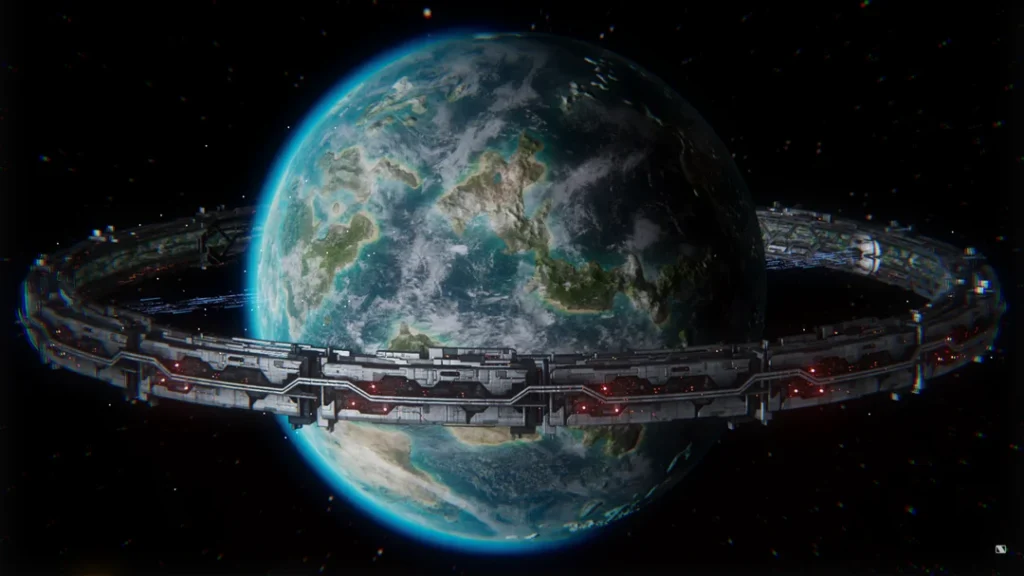
The core concept of Project West Ford was to create an artificial ring around the Earth, roughly 3,500 kilometres above the surface.
Instead of launching a massive solid structure, which was technologically impossible at the time, scientists decided to launch a payload of microscopic copper wires. Each needle was exactly 1.78 centimetres long and thinner than a human hair. This specific length was chosen because it was exactly half the wavelength of the 8 GHz radio frequency the military intended to use, making each individual needle a perfect dipole antenna. The plan called for dispersing 480 million of these needles into a continuous orbital belt.
When radio waves were beamed up to this copper cloud, the needles would scatter the signal, allowing a receiving dish halfway across the globe to catch the reflection.
Triumphs and outrage
The project was not without its hurdles, both technical and political.
The first attempt to deploy the needles occurred in October 1961. The dispensing mechanism malfunctioned and the needles failed to spread out, instead orbiting the Earth in useless dense clumps. A second attempt in May 1963 was a resounding technical success. The needles dispersed as planned, forming a faint copper ring around the globe. Shortly after deployment, researchers successfully transmitted voice data and teletype messages between California and Massachusetts by bouncing signals off the artificial belt.
However, while the military celebrated, the global scientific community was furious. Astronomers around the world, backed by the United Nations, raised substantial protests. Optical astronomers feared the copper ring would interfere with their ability to observe the stars, while radio astronomers worried the belt would drown out the faint signals emitted by distant galaxies. Project West Ford unwittingly gave birth to the world’s first major debate over space debris and the environmental contamination of orbit.
The legacy of the copper ring
Ultimately, the copper ring of Project West Ford was short-lived. The project’s engineers had calculated that solar radiation pressure, the literal push of sunlight on physical objects in space, would gradually force the lightweight needles out of orbit. Within a few years, the vast majority of the tiny antennas safely re-entered the Earth’s atmosphere and burned up entirely.
Furthermore, the technology was almost immediately rendered obsolete. Even as the needles were being launched, the first true active communications satellites, including Telstar, were proving to be infinitely more capable for global communications than a passive cloud of copper.
Today, Project West Ford is remembered as a fascinating and bizarre footnote of Cold War paranoia. But its legacy extends well beyond military history. The international backlash against the project helped pave the way for the 1967 Outer Space Treaty, which established the foundational principle that space belongs to all of humanity and that no single nation has the right to clutter the heavens.
Project West Ford predates the 1967 Outer Space Treaty by four years. The controversy it generated was one of the key arguments that made that treaty necessary.