
The quietest places on earth now have waiting lists, nightly rates, and cancellation policies. Silence has become a product, and like most products, the people who need it most are the ones who can least afford it.
There is a resort in Norway, above the Arctic Circle, built on a frozen lake. In winter, the snow that surrounds it creates natural sound insulation so complete that guests report being able to hear their own heartbeats. The property is called The Hush. It has a waiting list. It costs more per night than most people spend on rent.
There is a ryokan outside Kyoto that enforces a whisper-only policy throughout its entire premises, uses noise-cancellation technology embedded in its walls and windows, and asks guests to surrender their phones at the door. There is an eco-resort in New Zealand situated in a designated quiet zone where aviation routes are restricted, with individual villas spaced half a mile apart to guarantee complete auditory privacy. Both have booking waitlists extending well into next year.
Silence, one of the most basic conditions of human existence for most of human history, has become a luxury product. It has a market. It has a price. And like almost every luxury product in the modern economy, the people who need it most are the people who can least afford it.
This is the story of how quiet became something you have to buy, and what it means that we got here.
The noise we have built around ourselves
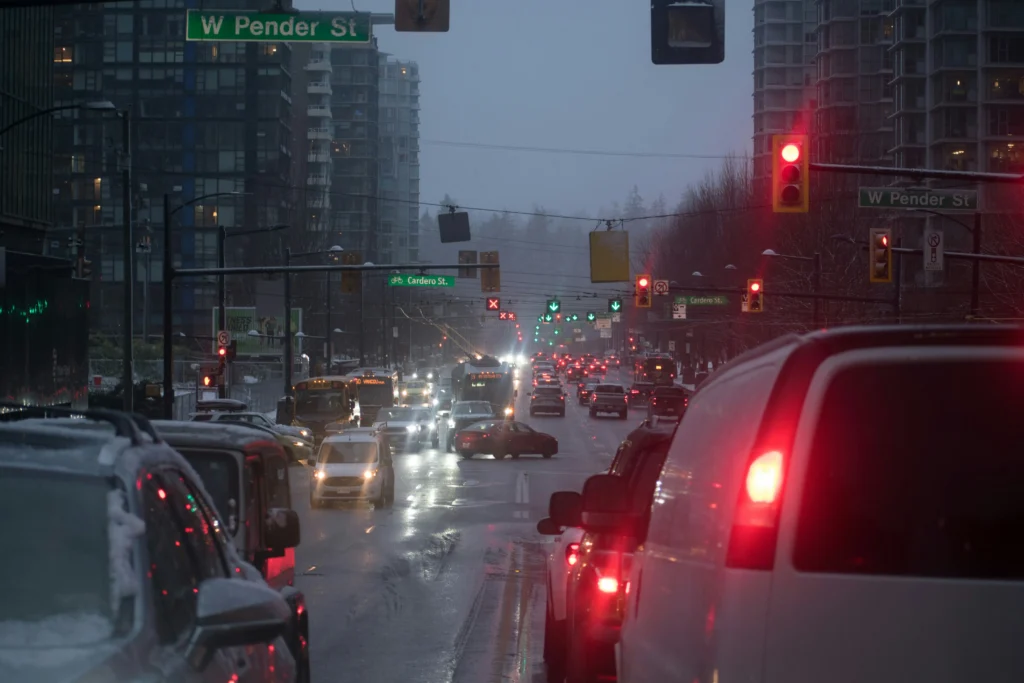
To understand why silence commands a premium in 2026, you first have to understand the scale of the noise problem that created the demand for it.
Over 100 million people worldwide are currently subjected to noise levels that exceed safe limits set by the World Health Organisation. These are not people experiencing occasional inconvenience. These are people living in conditions of chronic acoustic stress that research has linked to cardiovascular disease, sleep disorders, cognitive impairment in children, depression, and reduced life expectancy. Traffic noise alone affects over 85 percent of urban residents, and noise pollution can reduce property values by up to ten percent in heavily affected areas.
The World Health Organisation estimates that Western Europeans collectively lose more than one million healthy life years annually due to noise-related illness. The figure for the rest of the world is likely higher and less well measured. Noise is the second largest environmental cause of health problems in Europe after air pollution, and it receives a fraction of the policy attention.
This is the backdrop against which the silence industry has emerged. Not as a response to the noise problem in any meaningful systemic sense, but as a way of selling an exit from it to the people who can afford to leave.
The market that grew from exhaustion
The hospitality industry has a name for what it is selling now. Hilton’s 2026 Trends Report, based on a survey of 14,000 travellers across 14 countries, introduced the term hushpitality to describe a new category of travel experience centred on restorative silence, acoustic design, and what the report calls radical nervous system regulation. According to Hilton’s research, the number one motivation to travel for leisure in 2026 is to rest and recharge, cited by 56 percent of global travellers. Not to see things. Not to do things. To rest.
The data around this is striking. Recent research finds that 57 percent of travellers express deep interest in structured silent retreats. 50 percent are specifically seeking digital detox experiences to combat chronic burnout. 48 percent are now adding what researchers are calling solo buffers — extra days of solitude before or after a group trip — specifically to decompress before returning to ordinary life. Ordinary life, it seems, has become something people need to recover from before they can face it again.
The noise-cancellation technology market, the silent retreat industry, the acoustic design consultancy sector, the soundproofed hotel room premium — all of these are growing rapidly, and all of them are growing for the same reason. The ambient noise level of modern life has crossed a threshold for a significant portion of the population, and the people who have the resources to escape it are paying whatever it costs to do so.
The global noise management market was valued at approximately seven billion dollars in 2025. That number is expected to grow substantially as demand for acoustic solutions increases across hospitality, real estate, and corporate sectors. Seven billion dollars is the market value of the human need for quiet. It is a number that deserves to be sat with for a moment.
What silence actually costs in 2026
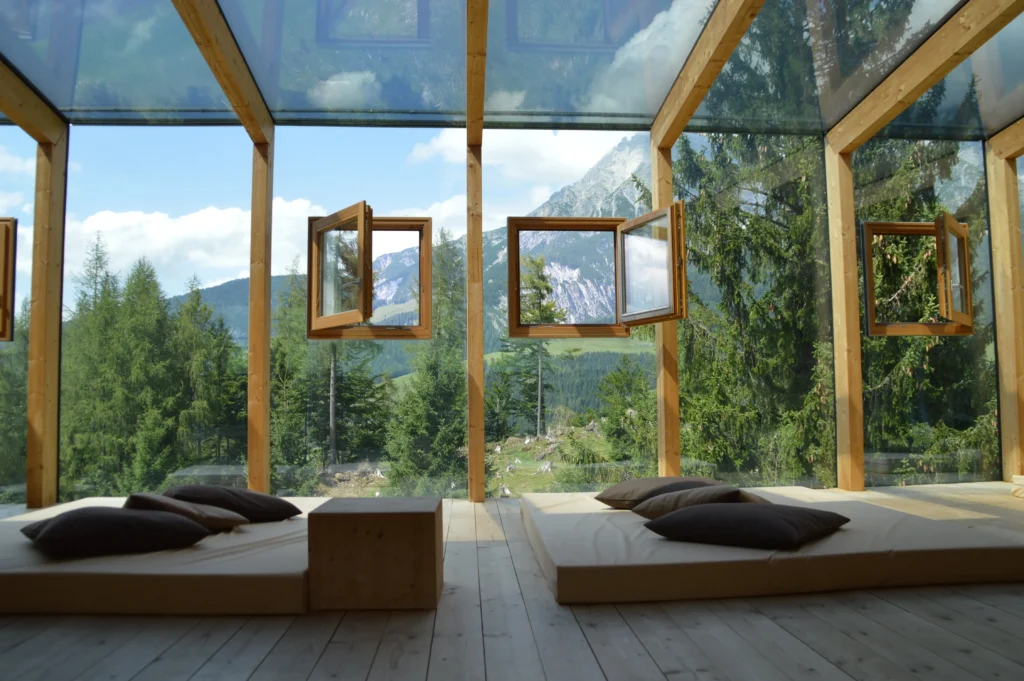
The commercial market for silence operates across several tiers, and the price points tell their own story.
At the top end, dedicated silence retreats in locations chosen specifically for their acoustic isolation — the Norwegian Arctic, the New Zealand highlands, remote Japanese mountain regions — charge anywhere from several hundred to several thousand dollars per night. These properties compete not on amenities in the conventional sense but on the quality and completeness of the quiet they can deliver. Acoustic architects are commissioned to design spaces that absorb rather than reflect sound. Building materials are selected for their noise-dampening properties. Policies around phones, voices, and movement are enforced as part of the product offering.
In the middle tier, major hotel chains have begun designating quiet floors, quiet zones, and silence-certified rooms at premium rates above their standard pricing. The logic is identical to the logic of the upgrade economy in aviation: the basic product is available to everyone, but the comfortable version costs more. In this case, the comfortable version is one where you can sleep without hearing your neighbour’s television through the wall.
At the entry level, noise-cancelling headphones — now a standard piece of personal equipment for anyone who commutes, works in an open-plan office, or simply wants to think without interruption — have become one of the fastest-growing consumer electronics categories in the world. Premium models from leading manufacturers cost several hundred dollars. They are, in essence, a personal silence device. A portable bubble of quiet that you carry with you because the world outside will not provide it for free.
And then there is the real estate market, where the class dimension of silence becomes impossible to ignore. Noise pollution reduces property values by up to ten percent in heavily affected areas. This means that quiet neighbourhoods are, by definition, more expensive neighbourhoods. The people who live near airports, motorways, rail lines, industrial zones, and busy urban roads are disproportionately the people who could not afford to live somewhere quieter. They are also, research consistently shows, disproportionately lower-income and from minority communities. The geography of noise in most cities is not random. It follows the contours of economic inequality with uncomfortable precision.
The people the silence industry cannot reach
There is a version of the story told so far that is simply a consumer trend piece. Silence is fashionable. Hotels are responding. The market is growing. Interesting.
But the version that matters is the one that asks who is not in those Norwegian cabins and Kyoto ryokans and New Zealand eco-villas, and what their relationship with noise looks like.
The person who works a night shift in an industrial zone where noise levels can reach 110 decibels — comparable to a rock concert, sustained across an eight-hour shift — does not have access to a silence retreat. The family living in an apartment beside a motorway interchange, whose children are growing up in conditions that research shows impair cognitive development and academic performance, cannot book a quiet floor upgrade. The elderly person in a dense urban neighbourhood, whose sleep is chronically disrupted by traffic and nightlife noise in ways that increase their cardiovascular risk, is not in the target demographic for hushpitality.
These are not edge cases. Over 100 million people globally are exposed to noise levels beyond safe limits. The overwhelming majority of them are not wealthy. The silence industry has identified the problem they are living with, packaged it as a luxury experience, and sold the solution back to the people who face the least acute version of it.
This is not a criticism of the hotels or the retreat operators or the acoustic architects. They are responding rationally to a real market demand. It is an observation about what it means when a basic human need — the need for quiet, for rest, for a nervous system that is not in a constant state of low-level stress response — becomes something that the market provides only to those who can pay for it.
The history of quiet as privilege
This is not, it should be said, an entirely new dynamic. The relationship between wealth and acoustic environment has always existed. Country houses were built away from the noise of cities. The wealthy have always been able to put distance between themselves and the sounds of industry, commerce, and crowding. The village green, the walled garden, the library, the private club — these were all, among other things, quiet spaces to which access was controlled.
What is different now is the scale of the noise problem and the commercialisation of the solution. The industrial city of the nineteenth century was loud, but the countryside was still free. The noise-cancellation technology of the twenty-first century is extraordinarily effective, but it costs four hundred dollars and requires a subscription to get the most out of it. The silence retreat is not a place that exists naturally and is freely accessible to those who can reach it. It is a product, designed and priced and marketed, available to those who can afford the rate.
The Finnish town of Koli, which has marketed itself internationally as a destination for people seeking silence and solitude, offers something that gestures toward a different model — quiet as a public good rather than a private product, a landscape that belongs to everyone who can travel to it. But even that requires the time and money to get there, which excludes the people who need it most and have the least of both.
What we are not talking about
The silence industry is booming in 2026, and the conversation around it is almost entirely about the product. Which retreats are worth the money. Which noise-cancelling headphones perform best. Which hotel floors are actually quiet. Which destinations have achieved the right combination of acoustic isolation and natural beauty.
What is largely absent from that conversation is the question of why the noise exists at the levels it does, who is bearing the cost of it, and whether the answer to a public health problem of this scale should be a luxury market rather than a policy response.
Noise pollution is regulated in most developed countries, but the regulations are widely considered inadequate and inconsistently enforced. Urban planning decisions that route heavy traffic through residential neighbourhoods, that permit industrial operations near homes, that allow the density of development that creates the acoustic environment most city dwellers live in — these are policy choices. They are not inevitable features of urban life. They are decisions that have been made, in most cases without serious consideration of their acoustic consequences, and that fall disproportionately on the people with the least power to object.
The silence industry has correctly identified that quiet is valuable. It has correctly identified that people will pay for it. What it has not done, and what it is not designed to do, is make quiet available to the people who cannot pay.
The sound of what we have built
There is a cabin in the Arctic Circle where the snow is so deep and so complete that you can hear your own heartbeat. There are people paying thousands of dollars a night to experience that. And there are people sleeping tonight next to a motorway, in an apartment beside a flight path, in a neighbourhood that was built where it was built because the land was cheap, and the land was cheap because it was loud, and it was loud because that is where the infrastructure went, and the infrastructure went there because that is where it always goes.
Silence used to be the default condition of human life. For most of human history, the absence of noise was simply what the world sounded like when nothing was happening. We built our way out of that condition over the course of two centuries of industrialisation and urbanisation, and we built it unevenly, in ways that left some people surrounded by noise they did not choose and cannot escape.
The silence industry is the market’s response to what we have built. It is efficient, creative, and genuinely responsive to a real human need.
It is just not available to everyone who has that need.
And that, more than the price of a night in a Norwegian cabin, is the thing worth paying attention to.